Overview
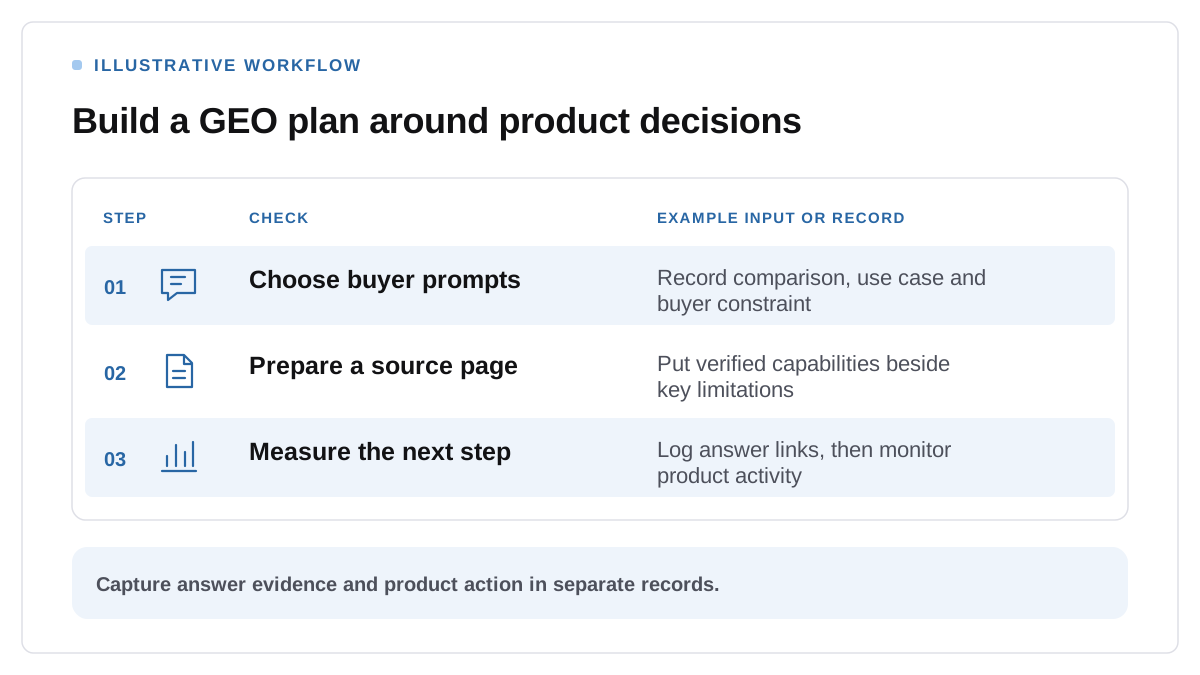
Start your generative engine optimization program with one decision a buyer is trying to make. A broad prompt such as “best AI tools” tells you little about where to invest. “Which AI meeting tools can produce summaries without recording the whole call?” identifies a buyer constraint, a feature claim to verify, and the pages an answer might cite.
Build the first prompt panel
Pull language from sales calls, support conversations, onboarding, and customer interviews. Pick a manageable set covering product discovery, comparison, and follow-up questions. Keep branded and unbranded prompts in separate groups. Run the same questions in fresh sessions and log the platform, date, locale, exact prompt, brand mentions, cited URLs, and factual errors. Save a handful of actual outputs beside the summary.
Give each priority question a source
Audit the existing product, use-case, pricing, and help pages. Assign an owner to the best page for each question. Put verified conditions near the relevant claim, such as the plan that includes a feature or a supported integration. Use a product demo or current documentation when it proves something text alone cannot. Review crawl access for the platforms you measure. Google describes its eligibility requirements for AI features in its site-owner documentation. Google Search Central
Connect visibility with a product action
Record referral visits and an activation event, such as a successful first run, in separate fields. Recheck the original prompt panel after material pages change. If a competing source is repeatedly cited, compare the substance of that page with yours before commissioning another article.
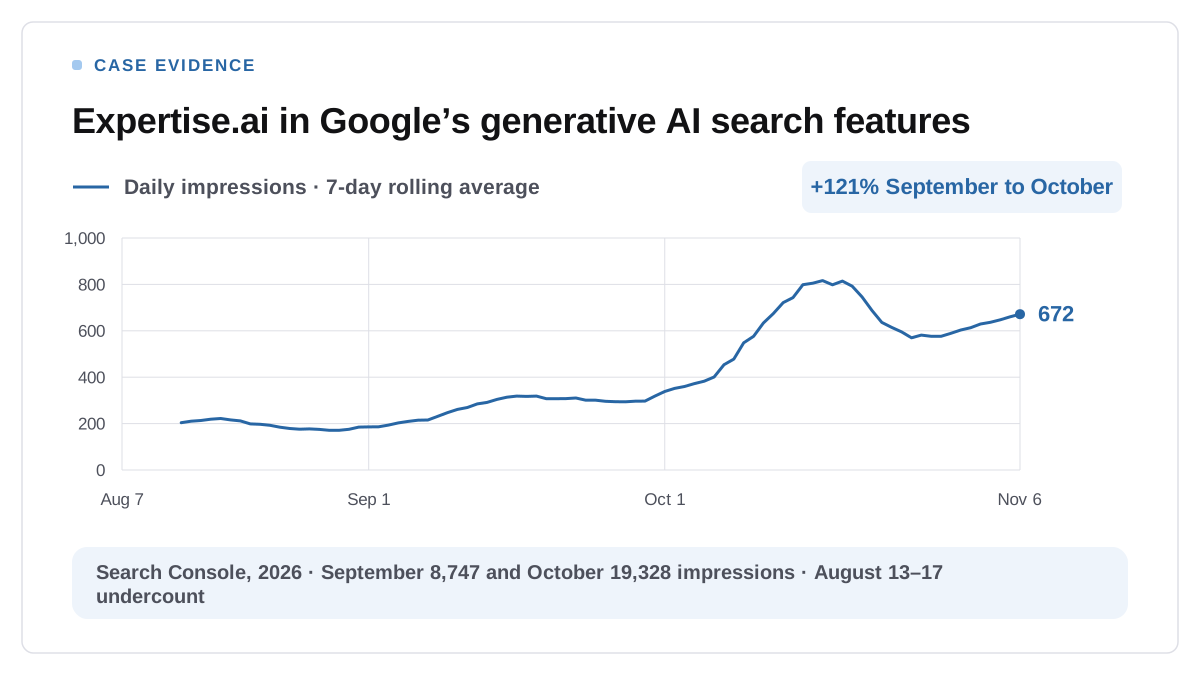
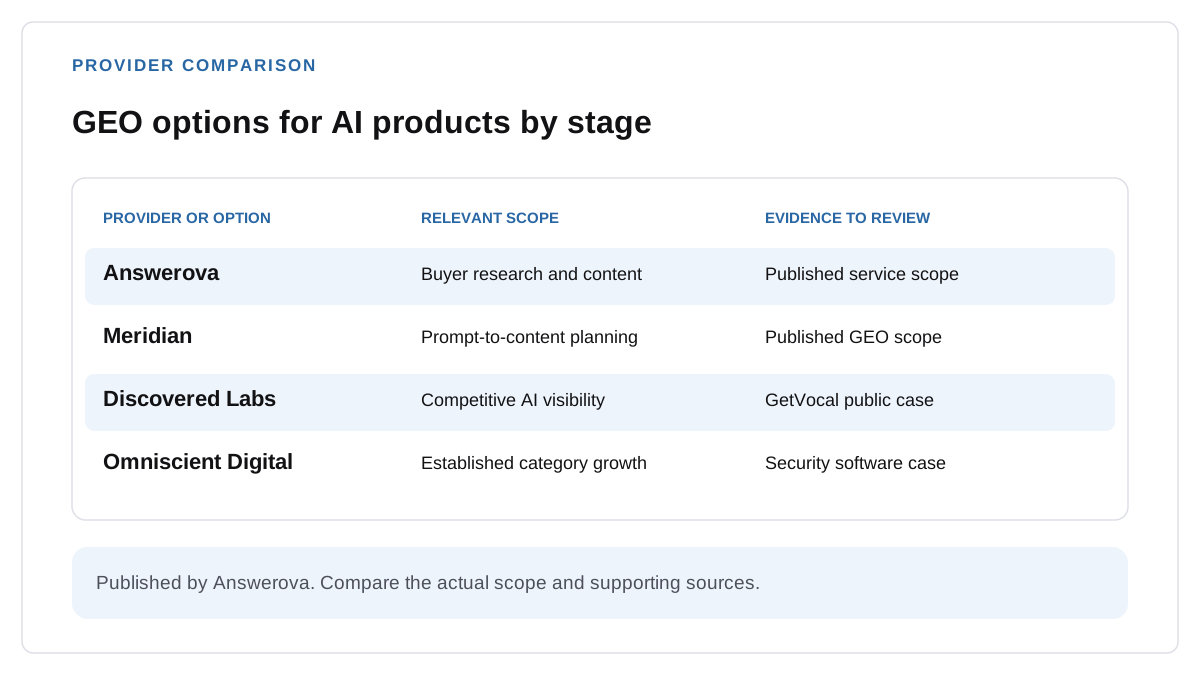
Start with one use case, five prompts, and one page you can improve this week. Use the Expertise.ai case study to see how Google AI feature visibility can be reported separately from Web traffic, or compare GEO agencies for AI companies if you need execution support.
The AI content optimization service explains how Answerova turns buyer questions and product evidence into a publishing plan.
Separate Google AI visibility and Web clicks
Expertise.ai’s Google Search Console export recorded 37,031 Generative AI Features impressions from August 7 to November 6, 2026. A separate Web export recorded 7,056 clicks and 489,057 impressions in that period. Web clicks reached 2,977 in October after 1,910 in September. Keeping the reports separate prevents the Web clicks from being counted as AI referrals. Expertise.ai Search Console case
Compare provider-reported visibility and referral mix
In a separate case with four reported months of observation, XstraStar says Zilliz and Milvus exceeded a 50% brand mention rate in ChatGPT and Gemini. It reports that AI-driven traffic grew 10× and rose from under 5% to over 50% of traffic. The public case does not provide prompt-level denominators or a breakdown of paid conversions. XstraStar’s Zilliz and Milvus case