Overview
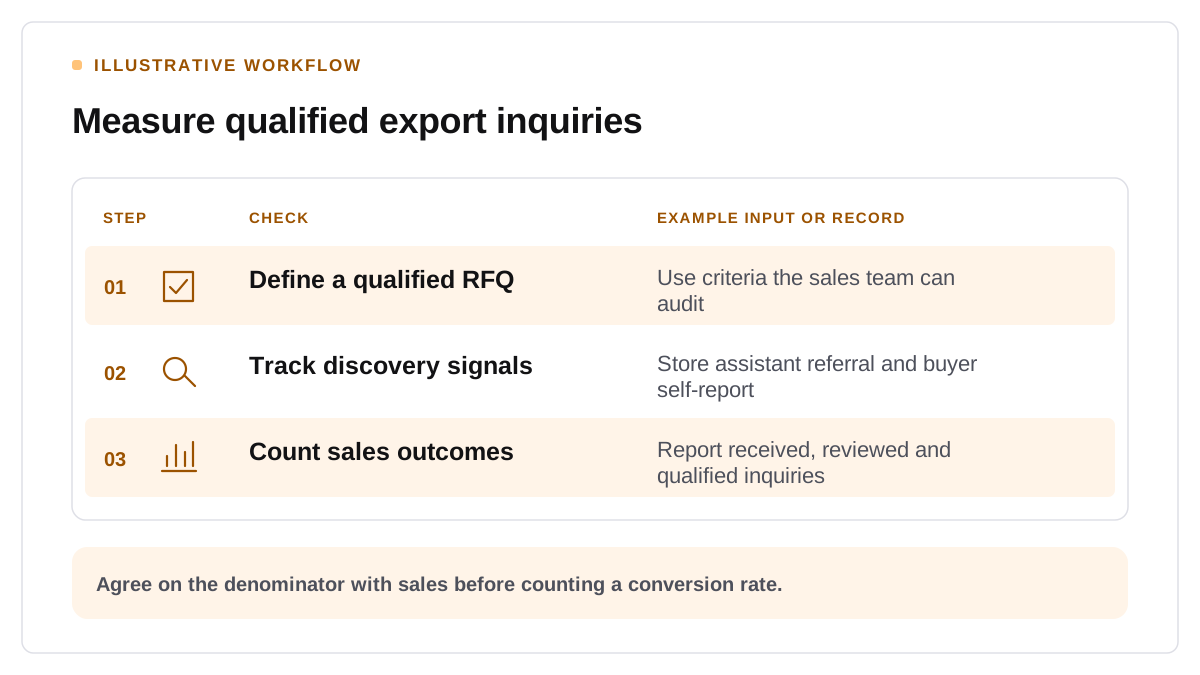
Define a qualified inquiry with sales before measuring GEO. For an illustrative export project, the criteria might include a contactable business buyer, a relevant equipment requirement and a serviceable destination. The final criteria should reflect what the team needs to decide whether to pursue a quote.
Keep discovery and qualification separate
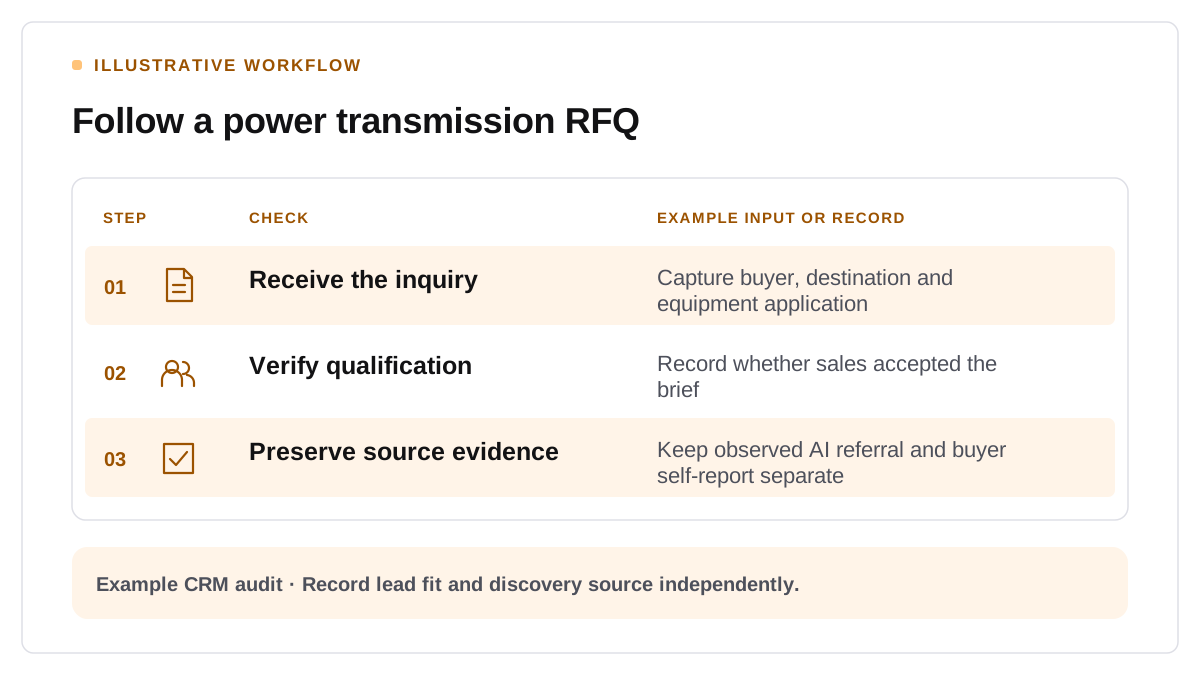
Carry landing page and observed session source into the CRM where your setup permits. Record customer-reported discovery in a separate field. A sales rep can then qualify an inquiry even when its source is unknown. Give duplicates, suppliers and irrelevant requests their own disposition so the overall form volume remains interpretable.
Track received inquiries, those reviewed, those qualified and quotes issued for the same period. Show a separate breakdown of observed assistant referrals, buyer-reported AI discovery and unknown source. When a record has both a referral and a survey response, count the inquiry once in the total and show the evidence flags.
Add a controlled view of visibility
Use a dated, market-specific prompt set and save citations for procurement questions. Review that evidence alongside the CRM report. With separate measures, an increase in correct sourcing mentions can inform page improvements while sales evaluates lead quality independently.
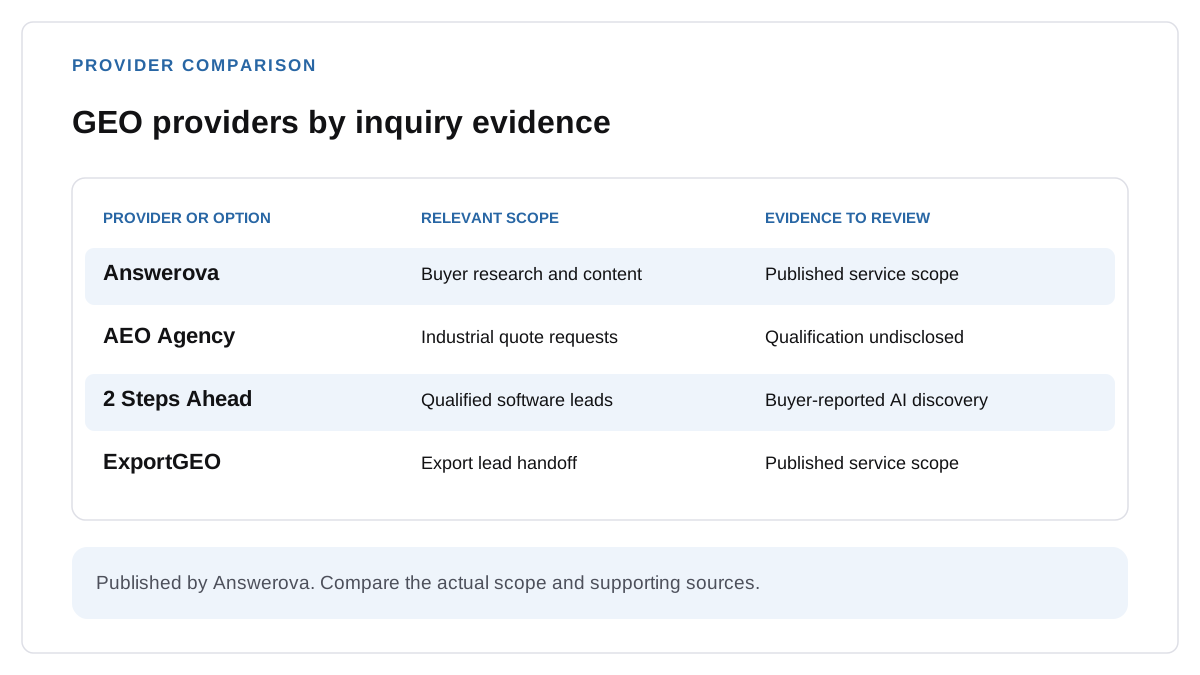
Start with one product and review ten recent inquiries with the export team. Our GEO provider comparison for B2B lead evidence shows which reporting questions to ask externally.
Check qualification and source evidence
2 Steps Ahead says the share of Omnia Retail’s qualified monthly inbound leads naming an LLM or AI search rose from 2% to 29% in nine months. Meetings attributed to AI search rose fivefold over the same period. Omnia asks each lead where it heard about the company. This software example shows why the CRM needs separate fields for self-reported discovery and a tracked session source. 2 Steps Ahead’s Omnia Retail evidence