Overview
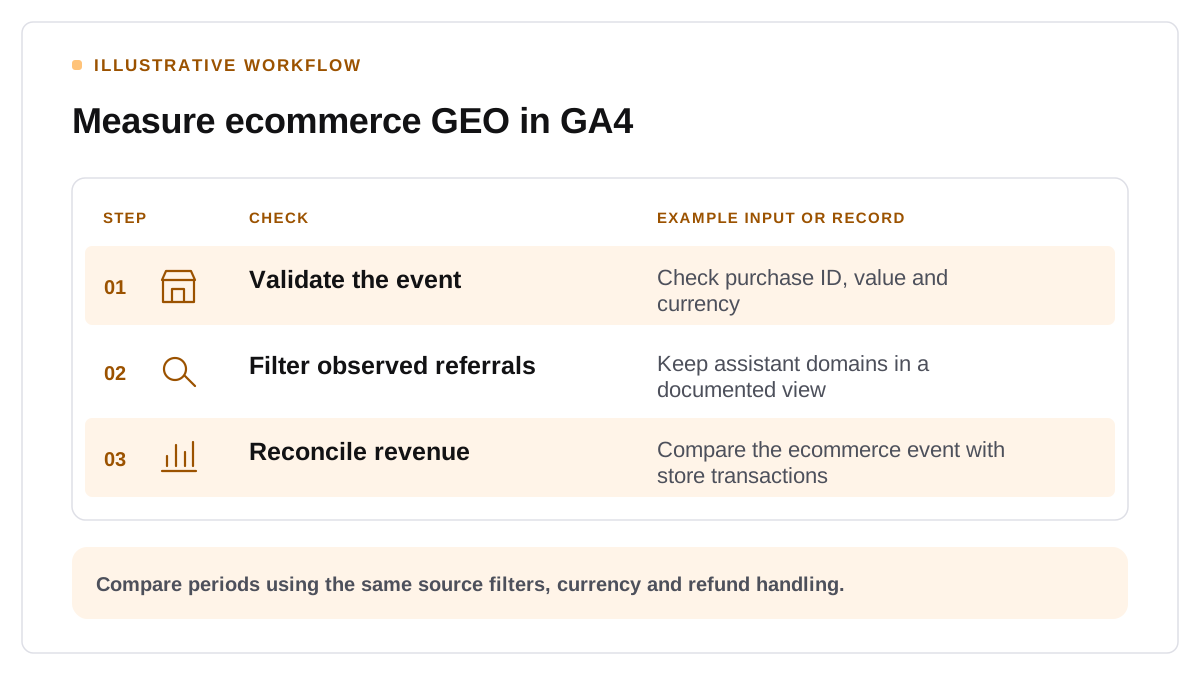
Start with the purchase event. Verify that it carries a transaction identifier, value and currency, then compare test purchases with the commerce platform. Check refund handling separately. Google’s ecommerce event documentation describes how to send purchase and refund data. GA4 ecommerce events
Build an observed AI referral view
Inspect the session source field and document the assistant domains actually present in your data. Create an exploration or report filter for those sources and verify several sample sessions against landing pages and available referral data. Keep the domain list and any exclusions in a dated change log. Report purchases, revenue and the number of qualifying sessions together. An increase from two purchases to six looks very different with those counts visible.
Keep the source definition and reporting window stable when comparing periods. If you use a separate conversion attribution report, label it so readers can distinguish attributed credit from purchases observed in a session. For Google Search AI features, follow Google’s published Search Console reporting scope. Google Search AI features and reporting
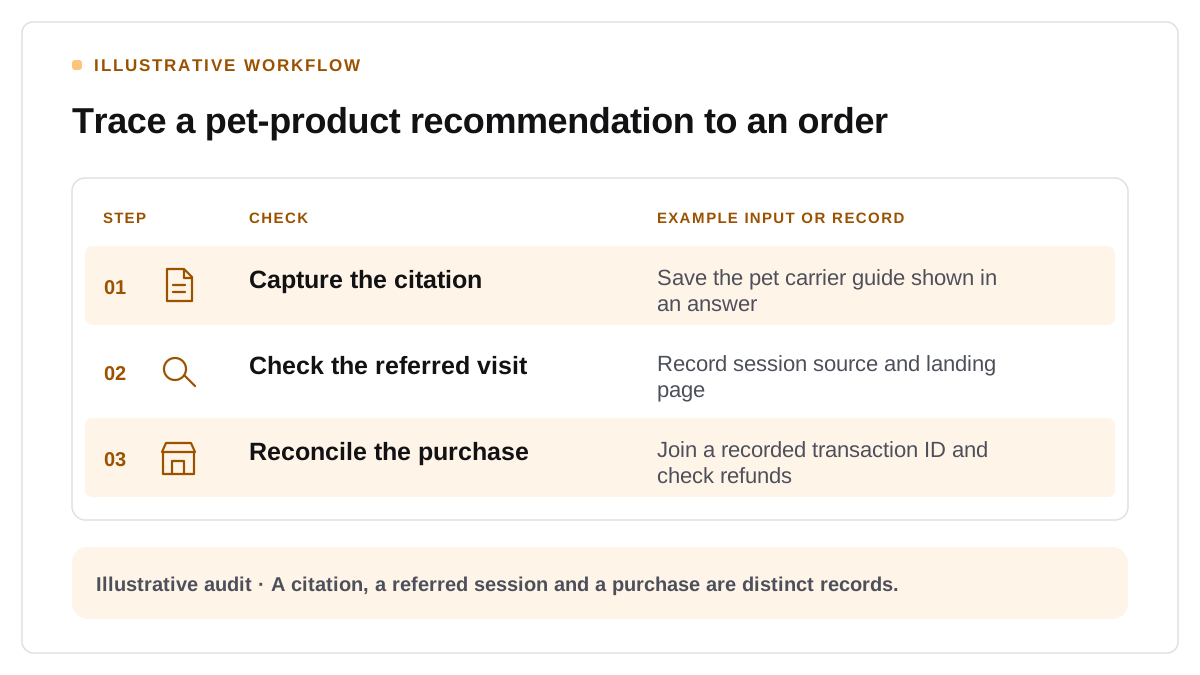
Keep separate evidence for discovery
Maintain one log for answer citations and a separate measurement view for observed referrals and transactions. Add a customer survey response as its own signal if you collect it. Compare your measurement rules against the examples in our ecommerce GEO revenue case roundup.
Use the illustrative DTC playbook to see how an ecommerce team can define buying questions, source evidence, and the business outcome it wants to measure.
Check what visitors do after an AI referral
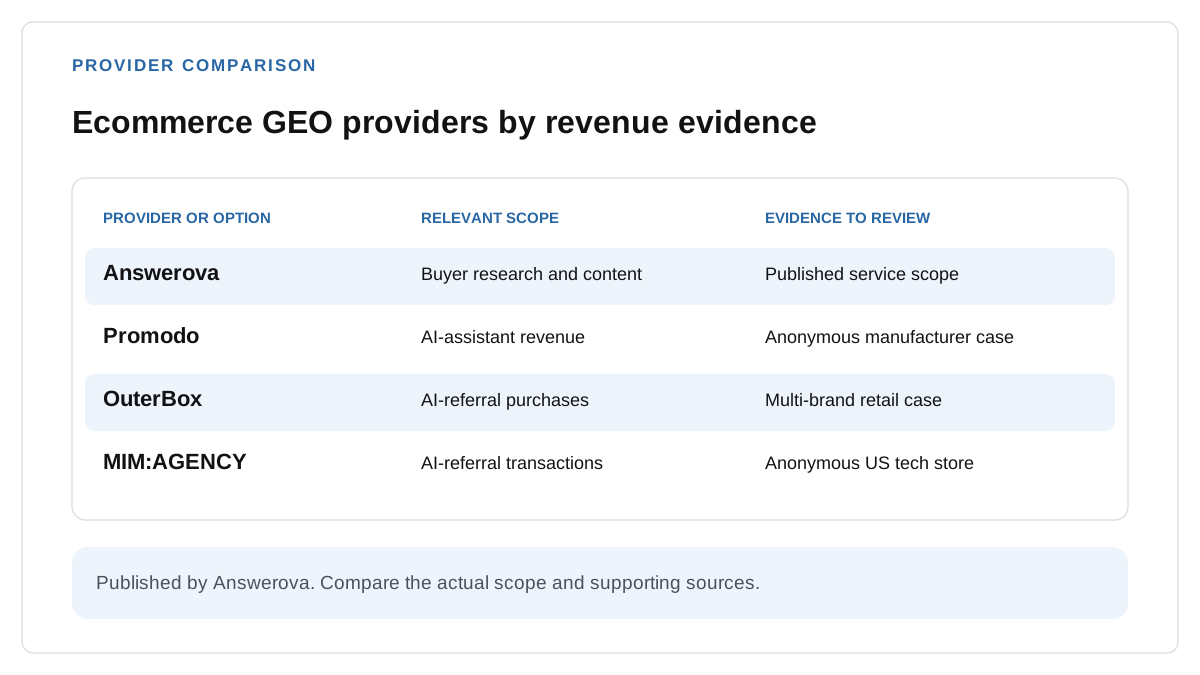
In Promodo’s anonymized power-tools and electronics case, the comparison runs from the February 2026 product-page release through May. The provider reports 478% more AI-referred pageviews, 28% more pages per session and 44% more revenue per session. The share of AI-referred visits landing on a product page rose from 58% to 63%. In its separate comparison to January 2025, the provider reports traffic from AI sources up more than 3,200%. Keep the baseline explicit when comparing changes in volume, engagement and order value. Promodo’s product-page results
Reconcile transactions by referral source
MIM:AGENCY’s January–May 2025 report for an unnamed US electronics store lists 773 ChatGPT transactions, 75 from Perplexity, 16 from Copilot, 14 from Gemini and 1 from Mistral. The five source rows sum to 879 transactions. For your own report, retain the transaction ID and source on each row so that the total can be reconciled. MIM:AGENCY’s transaction breakdown
Compare equivalent periods and refund handling
OuterBox reports that AI search and LLM referral revenue rose 692% for its gym-equipment client, 2,057% for an industrial-attachment retailer and 4,785% for an outdoor-living brand, comparing the first half of 2026 with the first half of 2025. Use matched dates in GA4 and preserve the same purchase event and refund treatment. OuterBox’s three retailer cases