Overview
An engineering document usually describes what the factory can make. An overseas buyer wants to know whether that specific product fits a requirement and what to provide to obtain a quote. Consider an illustrative exporter preparing an English product page from a Chinese technical specification.
From source document to verified statement
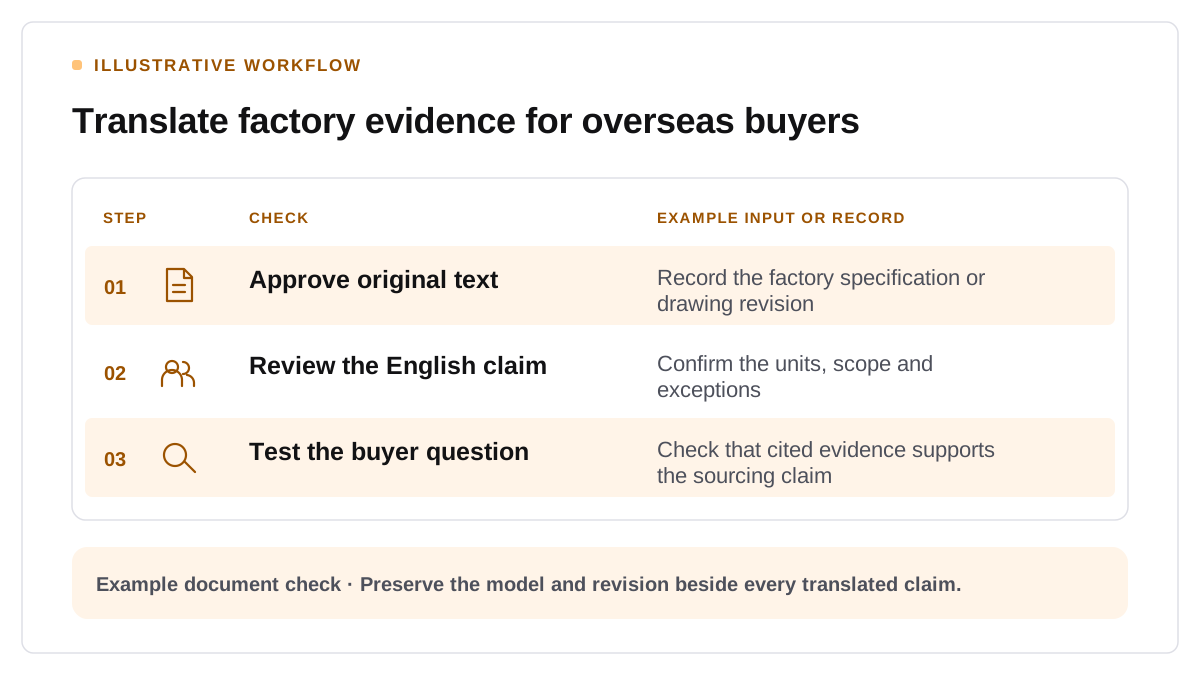
Start with a manufacturer-approved specification sheet, drawing or test document. The bilingual working table should record the original statement, the approved English wording, the model it applies to and its revision date. A term such as “customizable” should resolve to a defined parameter range or a clear instruction to request engineering review. For any certification statement, confirm the model and scope from the underlying document.
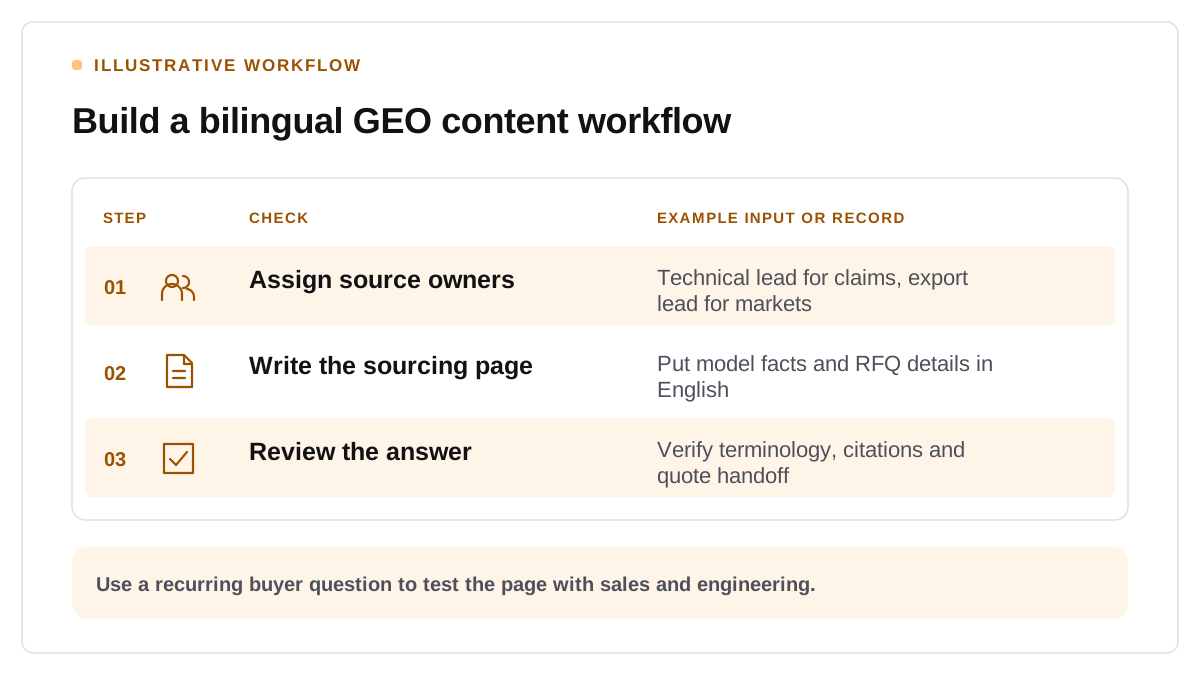
The English page can then give a short decision summary, show the configuration details and route the buyer to the relevant technical or RFQ contact. Build example prompts around those decisions and keep copies of the answers. If a distributor citation carries an outdated figure, identify the document owner and record which revision superseded it.
What the case needs to prove
For a measured result, keep one verified before-and-after document pair and one dated example of what an AI answer cited. If the team has only the source documents, report the editorial change and use a future prompt test to measure the result. The English GEO workflow for Chinese exporters sets out how to run the evidence review.
Check the localized launch record
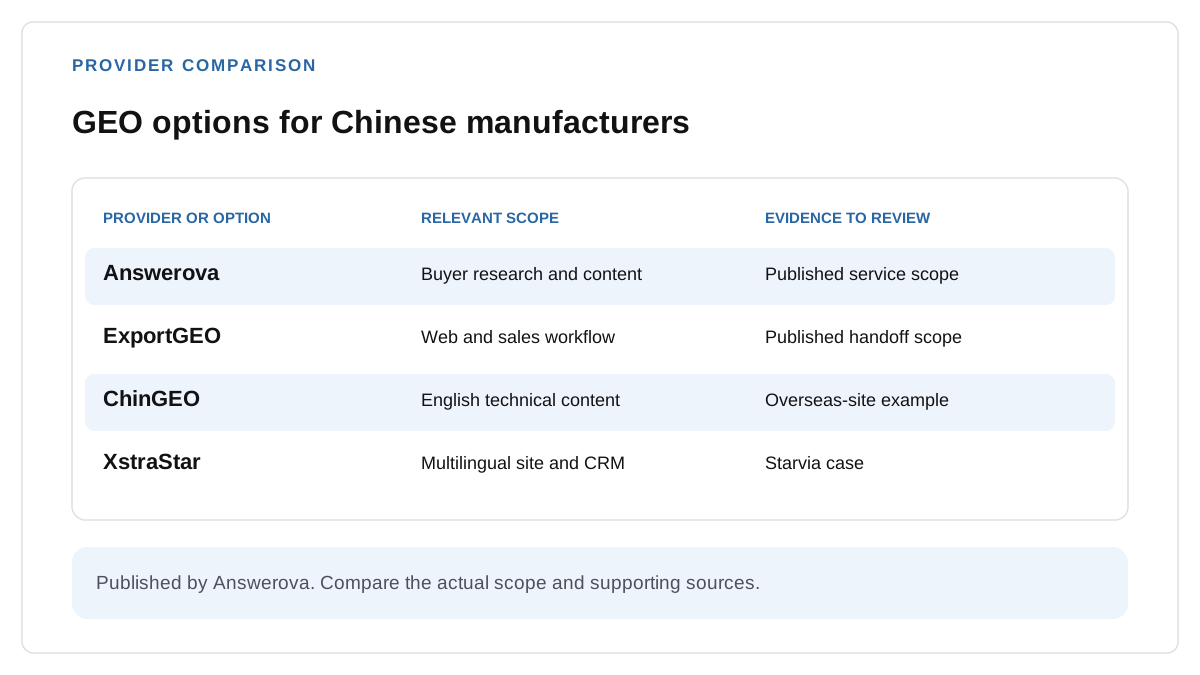
XstraStar’s Starvia case gives separate monthly Google Search Console observations. It reports 14 Google impressions before launch, 10,062 in June, 18,308 in July and 42,634 in August 2026. Clicks moved from 1 before launch to 81, 183 and 293 in those months. Average Web search position moved from 14.0 in the first month to 10.8 in August. Those Web search results use a different measure from the AI mentions reported above. XstraStar’s Starvia monthly results