Overview
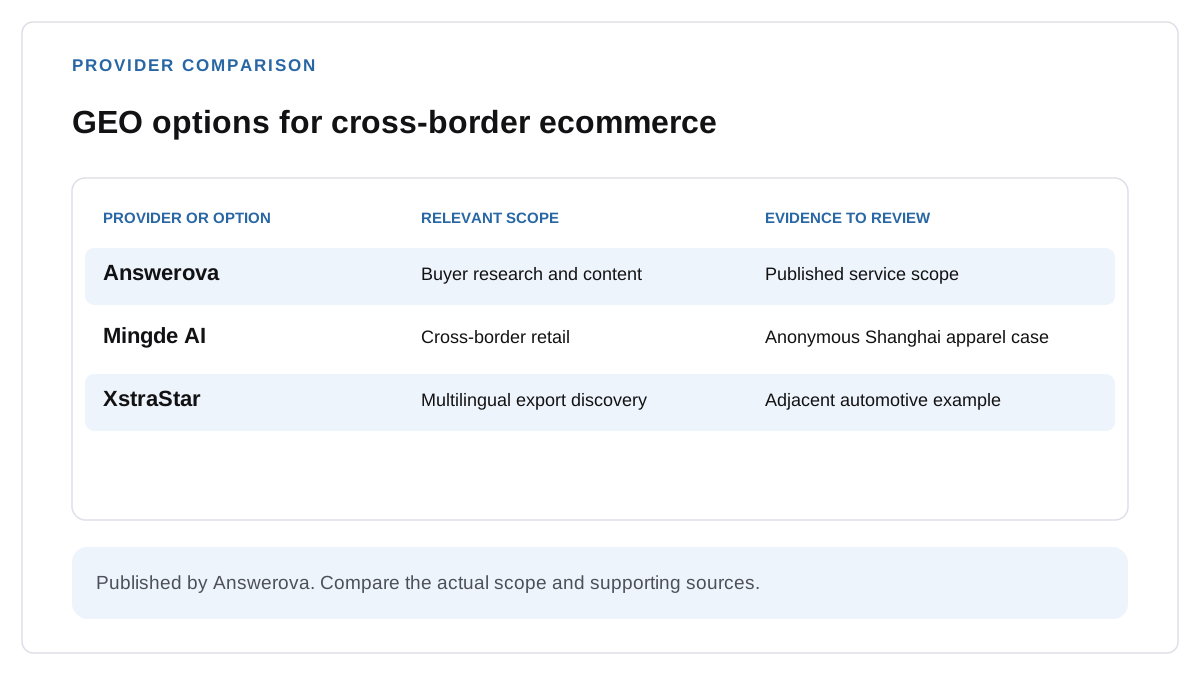
Mingde AI published a case for an unnamed Shanghai women's apparel brand selling abroad. It describes a brand with existing Google visibility that was absent from the AI answers the provider tested for category-level export questions. This is a useful starting point for ecommerce teams assessing whether demand in one discovery channel carries over to another. Mingde AI cross-border ecommerce case
What the provider reports
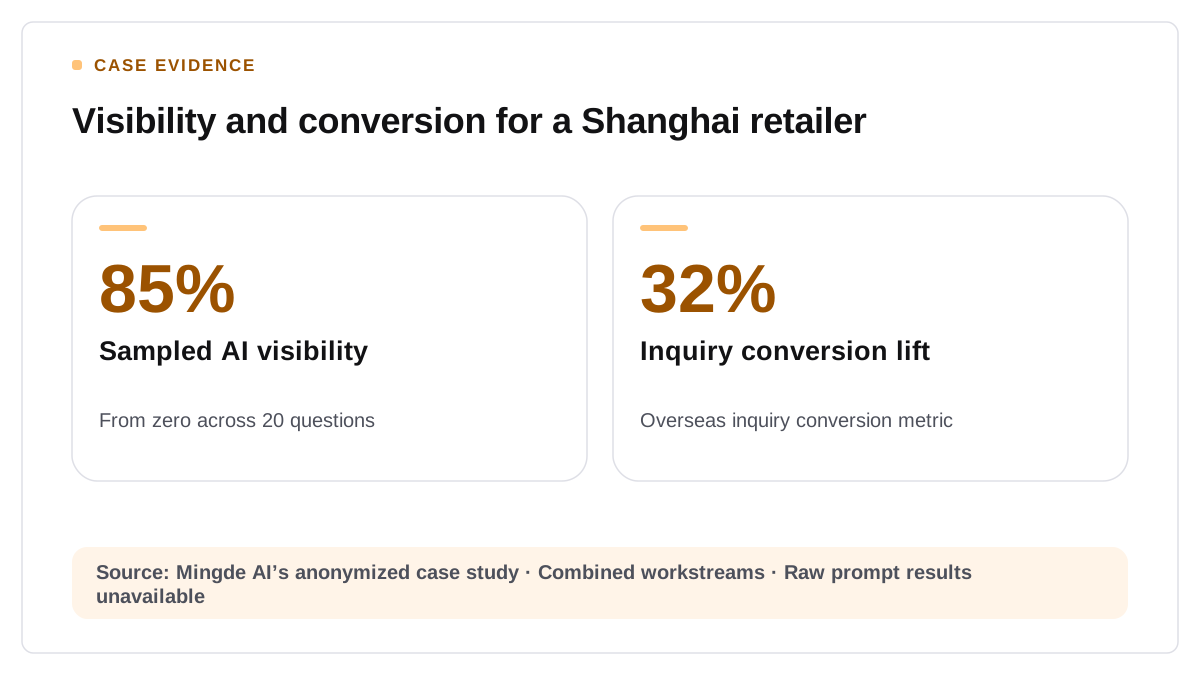
The vendor describes a combination of AI visibility work and broader operational changes, including multilingual customer support and product content. It reports an increase in its AI visibility measure from zero to 85% across 20 sampled industry questions. The page also reports a 32% lift in overseas inquiry conversion. The description gives a basis for discussing the case while the unnamed client and bundled work limit what an outside reader can verify. Mingde AI cross-border ecommerce case
What to take into a pilot
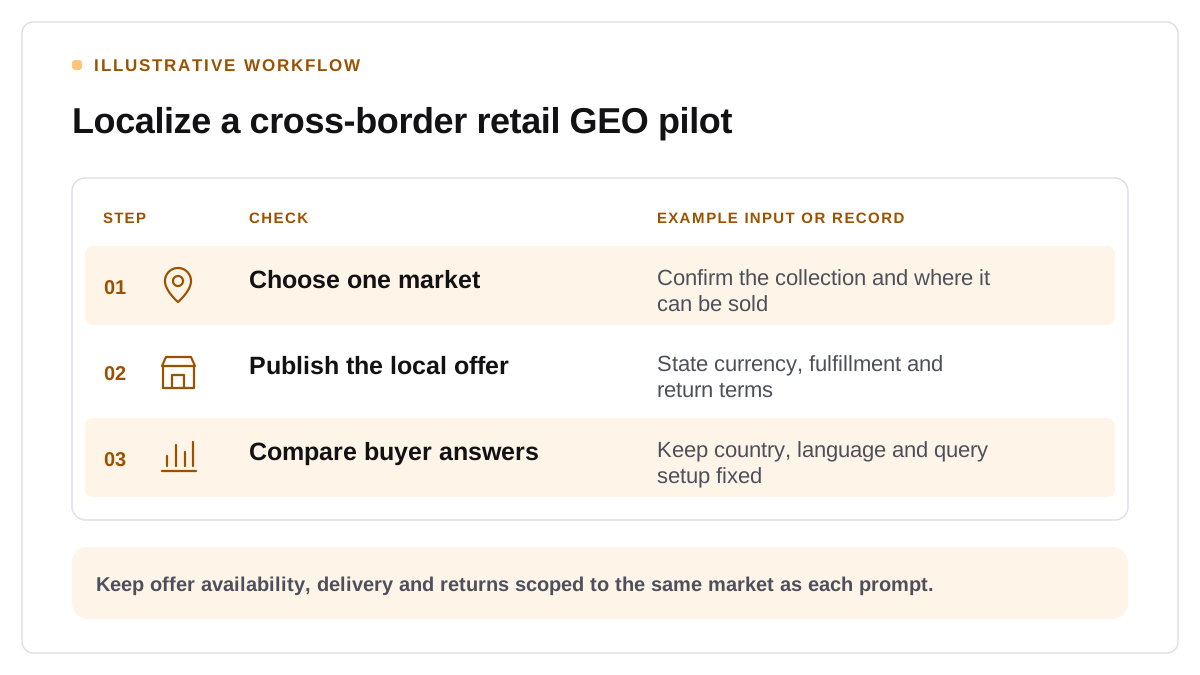
Pick one export destination and one collection. Document which assortments, delivery and return terms apply there. Build questions about those exact conditions and repeat them under a recorded assistant and market setup. Log when an answer names the brand, cites it and describes the offer accurately. Use a separate evidence trail for inquiries so operational changes and AI exposure can each be discussed on their own terms.
The cross-border ecommerce GEO guide shows how to define that pilot from a market brief.
Record operational measures alongside answer visibility
Mingde AI describes a 48-hour site overhaul, SKU content in 5 languages and new support workflows. Its report says preparing a SKU fell from 2 hours to 15 minutes and support response time fell from 15 minutes to 2. The provider reports complaints fell from 6% to 2.5% while its team supported customers in 4 languages across 6 time zones. Those measures belong to the broader operating project. The provider compares overseas inquiry conversion over a three-month window. Mingde AI’s project scope and metrics